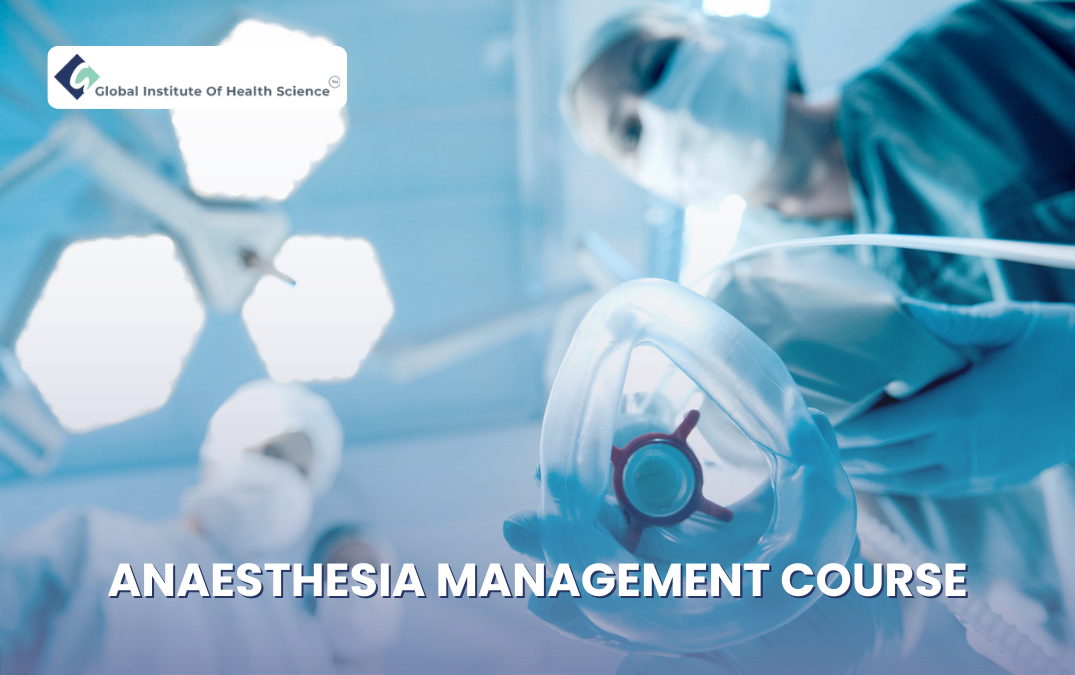
This GIHS Anesthesia Management Program will provide and upgrade knowledge and skill in anesthesia technology and its management. Anesthesia enables the painless performance of medical procedures that would otherwise cause severe or intolerable pain to an unanesthetized patient, or would otherwise be technically unfeasible. It will help to upgrade knowledge in all aspects of blood banking, transfusion medicine, hematopoietic, cellular and gene therapies, and tissue transplantation. Anesthesia management entails a broad range of factors related to characteristics of the hospital and anesthetic department (operating room, preoperative and postoperative care unit, medical ward, and intensive care unit), training and education, quality and quantity of physician and non-physician staffing, availability and use of medical protocols, and standards for monitoring in the intraoperative and postoperative period.
The objective of this program is to prepare individuals on variety of subjects including regulatory and quality systems, genetics, immunology, immune mechanisms and various anesthesia. Online certificate course in anaesthesia and anaesthetic technician course is helpful for the medical practitioner, medical services provider and technician. General anesthesia suppresses central nervous system activity and results in unconsciousness and total lack of sensation, using either injected or inhaled drugs. Sedation suppresses the central nervous system to a lesser degree, inhibiting both anxiety and creation of long-term memories without resulting in unconsciousness. Regional and local anesthesia, which blocks transmission of nerve impulses from a specific part of the body. Depending on the situation, this may be used either on its own (in which case the patient remains fully conscious), or in combination with general anesthesia or sedation.
*Fees subject to taxes & exchange rates.
*Fees subject to taxes & exchange rates.
Trustindex verifies that the original source of the review is Google. Amazing institute.Very helpful and supportive team. I had a beautiful learning experience.Posted on GoogleTrustindex verifies that the original source of the review is Google. I liked that Ijoined with the best countries by your Helping ProcessPosted on GoogleTrustindex verifies that the original source of the review is Google. The PG Diploma in Nutrition course covers the basic concepts clearly. Teaching is satisfactory and the study material is useful for understanding nutrition fundamentals. Overall, it is a decent course for those looking to gain knowledge in this field.Posted on GoogleTrustindex verifies that the original source of the review is Google. Vijay sir and chethan sir Thanks for your guidance throughout the academic year. May God bless this institute even more!Posted on GoogleTrustindex verifies that the original source of the review is Google. Very goodPosted on GoogleTrustindex verifies that the original source of the review is Google. One of the best institutions. I have recently completed my PG Diploma in Clinical Research and Pharmacology. Course is carefully structured and detailed. Management is very well organised and prompt in assistance. I would highly recommend this institution.Posted on Google
For a career in anesthesia, individuals can go for different courses based on their preferences. You can do a BSc in Anesthesia technology, or a BSc in Anesthesia. You can also pursue a Master’s in Anesthesia or an MD (Doctor of Medicine) in Anesthesia.
An anesthetist typically holds a bachelor’s degree in medicine such as MBBS along with an MD or diploma in anesthesia. In India, a postgraduate degree in anesthesia is commonly required. Anesthetists undergo specialized training to administer anesthesia, manage perioperative care, and monitor patients during surgical procedures.
A BSc in anesthesia is an undergraduate program that provides students with the necessary knowledge and skills to work as anesthesia technologists or assistants. It covers topics such as anatomy, physiology, pharmacology, and the principles of anesthesia technology.
The difficulty of a BSc in anesthesia can vary based on an individual’s background and study habits. Like any medical-related program, it requires a solid understanding of science and healthcare principles. However, with dedication and interest in the field, many students find BSc anesthesia manageable and rewarding.
To become an anesthesia technician, individuals typically need a BSc in anesthesia technology or related programs. They can also gain practical experience and consider obtaining certifications such as the one we provide at GIHS